Meridian is a tabletop object that translates biometric data into an evolving visual form, a continuous, living reflection of emotional state designed to exist in the periphery of everyday life.
The dominant model for biometric data is analytical: numbers, charts, scores. Meridian proposes an alternative. When that same data is translated into living visual form, it becomes ambient, emotionally resonant, and present in everyday life. Visible without being demanding. Present without being prescriptive.
The System
Meridian's visual system is driven by biometric input, including heart rate variability, skin conductance, and breath. That data is translated into particle behavior through four parameters: field density, signal trace, signal duration, and field disturbance. Together these govern the movement, population, and turbulence of each state. The result is eight distinct visual signatures, each one a direct expression of what the body is already doing.

Field Density
Defines how populated the emotional field becomes.

Signal Trace
Determines how long each signal stays active.

Signal Duration
Controls how long movement remains visible.

Field Disturbance
Shapes the amount of instability in the field.
Process
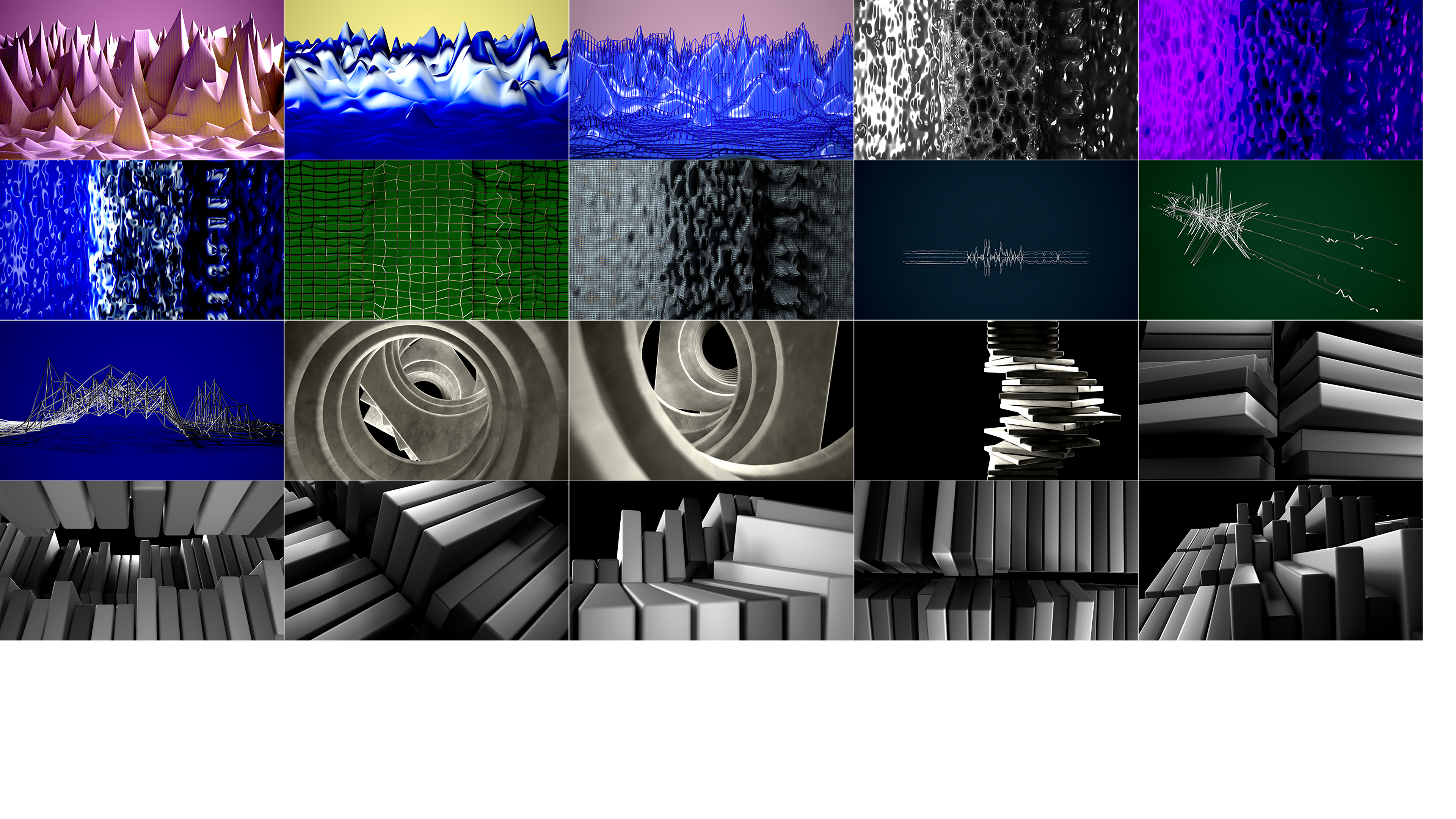
The design process moved through two parallel threads. The first explored physics-based simulation, experimenting with magnetic fields, fluid particles, and liquid dynamics to understand how emotional states might be expressed through motion.
The second pursued form, moving from compass rose shapes through an hourglass before arriving at the teardrop.
Each earlier form contributed something: the compass its directionality, the hourglass its relationship to time. The teardrop carried both, while adding an emotional resonance the others lacked.
Design Insights
Data has a life outside the dashboard. Translated into dynamic visual form, biometric information becomes emotionally meaningful without requiring analysis or interpretation.
A strong conceptual metaphor is a design tool. The navigation framework underlying Meridian, invisible lines that orient without demanding attention, informed decisions across form, interaction, and language simultaneously.
Designing outside familiar technology formats reveals unmet needs. The emotional resonance of this project surfaced a widespread and largely unaddressed desire to understand one's own feeling state and that of the people nearby.
When an object is designed to live in the background rather than compete for attention, subtlety becomes the defining design challenge.
Conclusion
Meridian demonstrates that biometric data can exist outside the dashboard as something evolving, visual, and woven into the rhythms of daily life. The project establishes a design framework for translating biological signals into living form, one that prioritizes awareness over analysis and presence over notification. The biometric input system is theoretical, and the engineering required to connect Meridian seamlessly to existing devices represents a significant area for future development. The project also opens toward new possibilities: a summary of emotional state across an entire day, made visible after the fact, or a means of sharing how one feels with someone else without words. Meridian is a vision for what emotional technology could be, and a step toward realizing it.